Before this lecture, I never really thought much about modality beyond whether a class was online or in person. What stood out to me was how much thought goes into designing learning environments and how those decisions affect different groups of students. I also learned that modality is much more complex than I originally thought. Before watching the lecture, I mostly viewed learning as either face-to-face or online, but I was introduced to concepts such as blended, hybrid, and multi-access learning. It made me realize that the way a course is delivered is not just a logistical decision—it can have a major impact on a student’s ability to participate and succeed.
One idea that I kept coming back to was that learners do not all have the same circumstances. As a student, it can be easy to assume that everyone has similar experiences, but the lecture highlighted how factors such as work schedules, family responsibilities, location, health concerns, and personal circumstances can influence what learning format works best. A course design that is convenient for one student may be challenging for another. This made me think about the importance of considering diverse learner needs when planning educational experiences. I thought about how a learner living in a rural area or balancing caregiving responsibilities might struggle to attend a course that is only offered face-to-face. At the same time, a first-year or international student might prefer in-person learning because it provides opportunities to build connections and receive support. These examples helped me realize that there is no single modality that works best for everyone.
I was also interested in how technology can expand opportunities for participation rather than simply acting as a replacement for face-to-face learning. Sometimes online learning is framed as the opposite of in-person learning, but the lecture showed that technology can be used in many different ways to support learners. The example of blended learning stood out to me because it combines the benefits of face-to-face interaction with the flexibility of online learning. Instead of focusing on which modality is “better,” it seems more useful to think about how different modalities can complement one another and create more opportunities for engagement.
The lecture also challenged me to think about flexibility from an educational perspective. As students, we often appreciate flexibility because it makes our lives easier, but I had not considered how flexibility can also promote equity. Giving learners different ways to access content, participate in discussions, and complete coursework can help remove barriers that might otherwise prevent some students from fully engaging in a course. One statement that really stuck with me was the idea that when institutions choose a single mode of delivery, some learners may be unintentionally excluded. I had never thought about modality in those terms before, but it made me realize that accessibility is about much more than simply offering a course online. It is about designing learning experiences that allow a wider range of learners to participate.
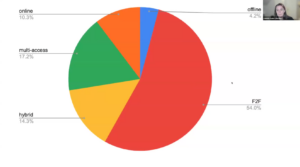
I was also surprised by how much learner preferences varied across different groups. Before the lecture, I assumed most students would have similar preferences regarding modality. However, the data showed that different groups often prefer different learning formats based on their needs and circumstances. This reinforced the idea that educational institutions face the challenge of supporting a very diverse population of learners rather than designing courses for a single type of student.
Going forward, I think educational institutions will continue moving toward models that offer greater choice. While there will always be benefits to learning in a physical classroom, technology provides opportunities to make learning more adaptable to individual needs. Rather than expecting all students to fit into one learning model, I think the future of education will focus more on designing learning experiences that can accommodate a wider variety of learners and situations. Instead of asking whether education should be online or face-to-face, I think the more important question is how we can create learning environments that allow more people to participate, engage, and succeed.